2. salt fired pieces
in my last post, I shared an insight into the process of salt firing, as part of the masterclass by ceramicist bernadette stokwielder in veghel, the netherlands. today i’m eager to share photos of the 15 finished pieces.
to me, every piece turned out absolutely perfect. a few pieces needed some grinding, as they had run slightly off the pots. it’s mostly glazes that include ash, that tend to float a lot more in combination with salt. these results gave me a lot of insight into the workings of these glazes and the best techniques to apply them. as you can imagine, i’m incredibly eager to participate in another salt firing. to be honest: it’d be an absolute dream to do so! I truly feel i’m starting to get a true sense of the kind of ceramics I’d love to make in the future.
down below you’ll find photos of the pieces, taken in the same order as those in my last post. i’ve included my notes on the glazes used and added a few thoughts alongside them. i’ll surely be sharing these photos on my instagram too, if you’d like to see the items in even more detail. and let me just add: they’re honestly even prettier in person.
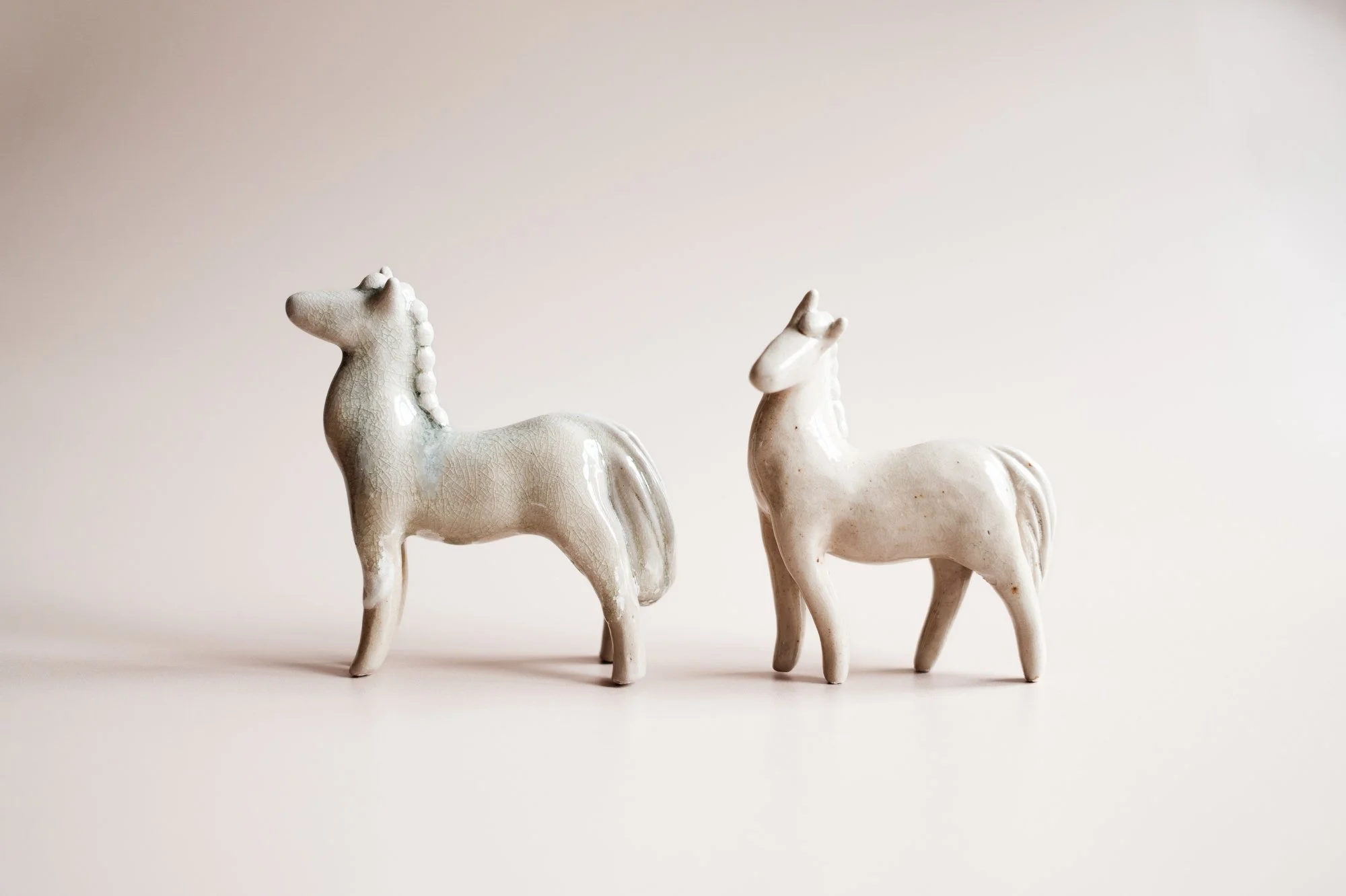
1. blue de reduction + shino 3a
2. shino 3a
I'm so incredibly pleased with these two little ones. for the pony on the right I decided to just stick to a little dabble of shino 3a on it’s mane and tail. the rest of the surface has been purely glazed by the presence of the salt in the kiln.
the one on the left turned out absolutely stunning. the celadon glaze is just gorgeous and I love the little crystallisation the shino 3a created on its legs.
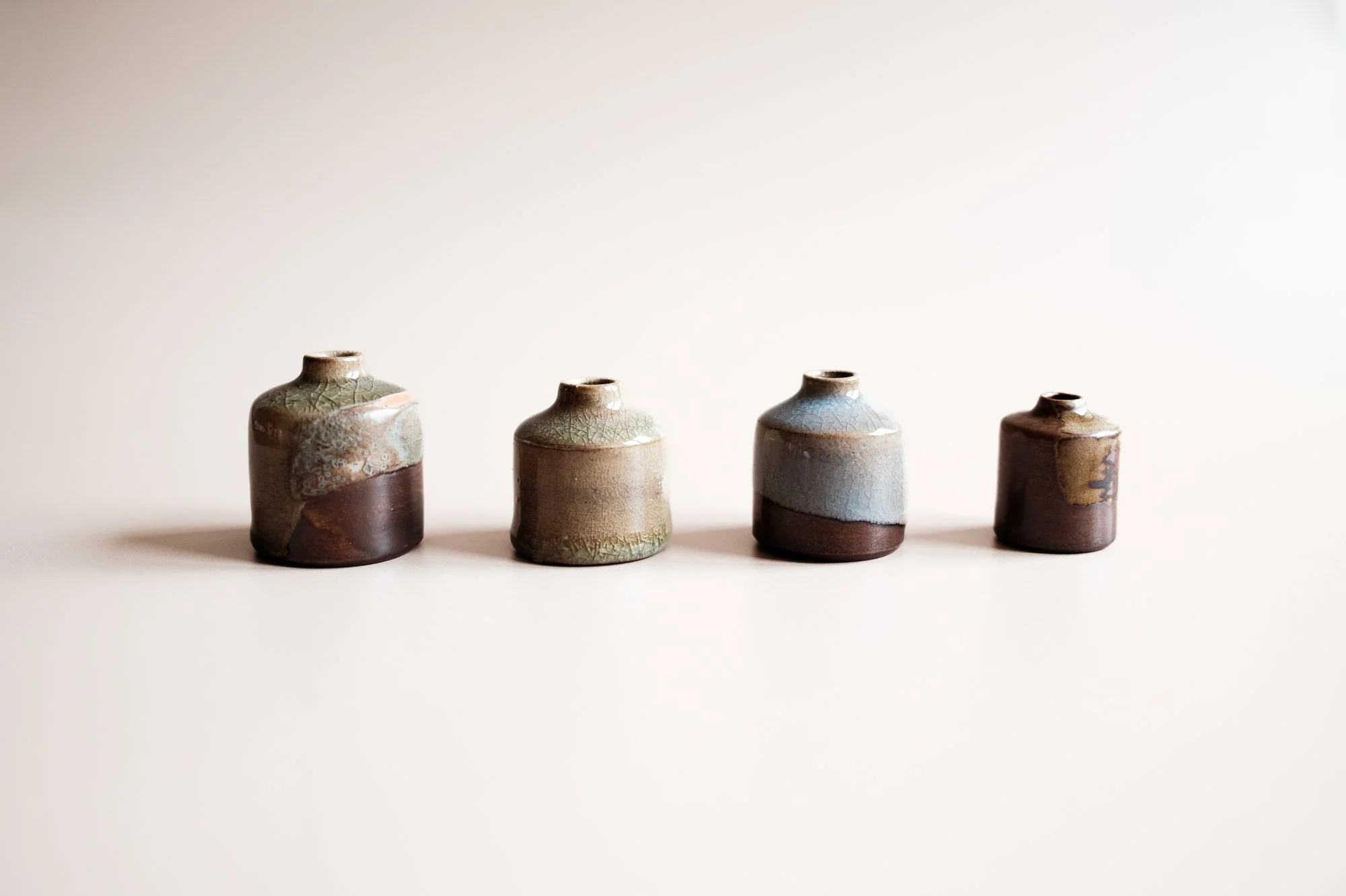
3. yoomi blue + shino 3a
4. crackle ash glaze by miezepluis
5. blue Kwan chun celadon
6. blue de reduction + red slip
aren’t these little pots just adorable? they’re all thrown on my miniature wheel, using toffee clay. in combination with salt, the clay turned an absolutely stunning, metallic-like deep brown.
I also love how my own crackle ash glaze behaves in the salt kiln. it turned such a lovely green! it is prone to running though, which I should keep in mind next time.
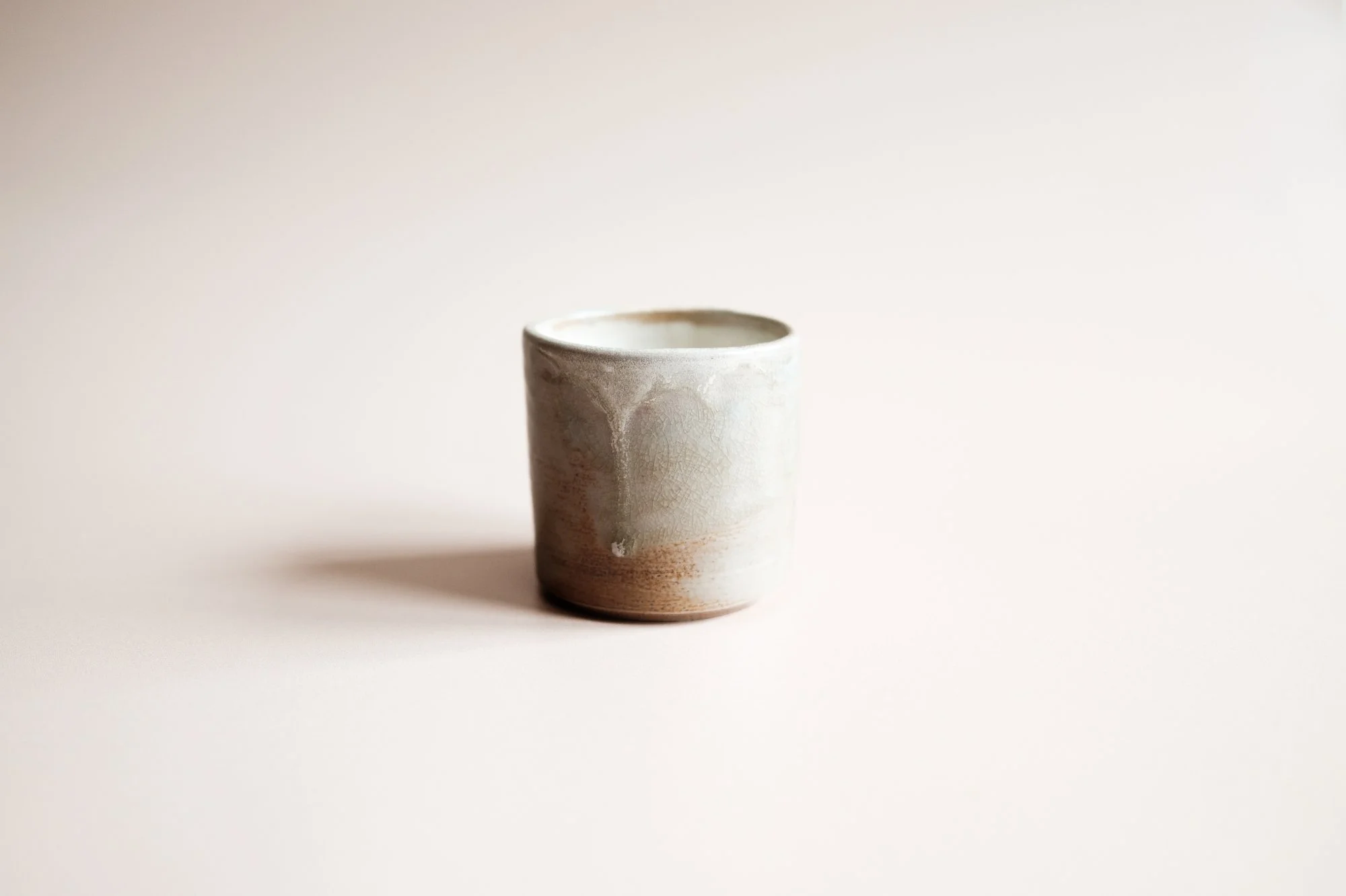
7. blue de reduction + shino 3a
I love the drippy application of the blue de reduction. it proves how pieces get better if you just stay loose and spontaneous in your handeling of the glaze.
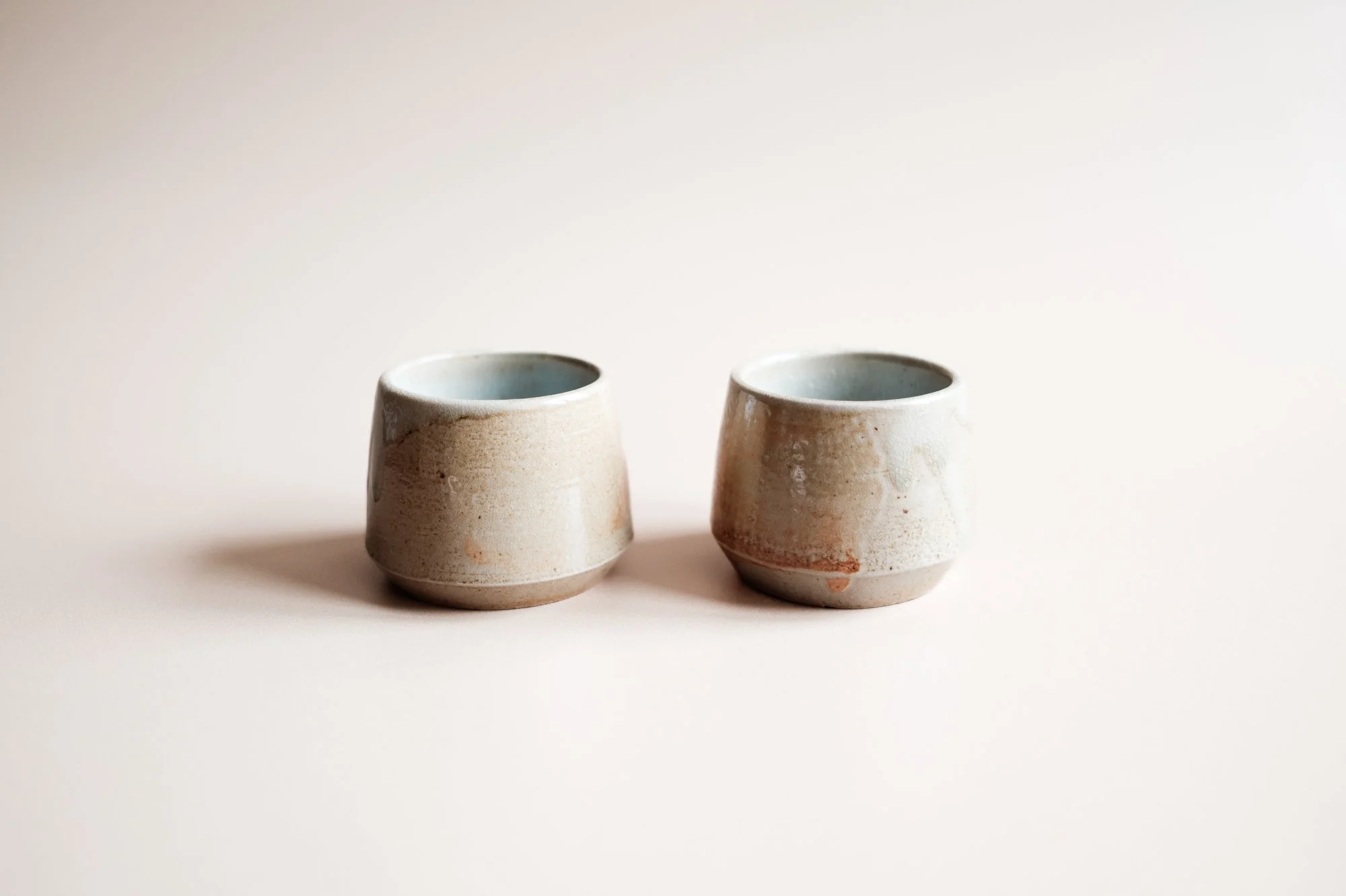
8. blue Kwan chun celadon + red slip
9. blue Kwan chun celadon + red slip
these little cups are glazed in the same combination as my teapot. they make a perfect set. the inside of these two cups shows a lovely light celadon shade, which is just so pretty. I also love the effect of the red slip.
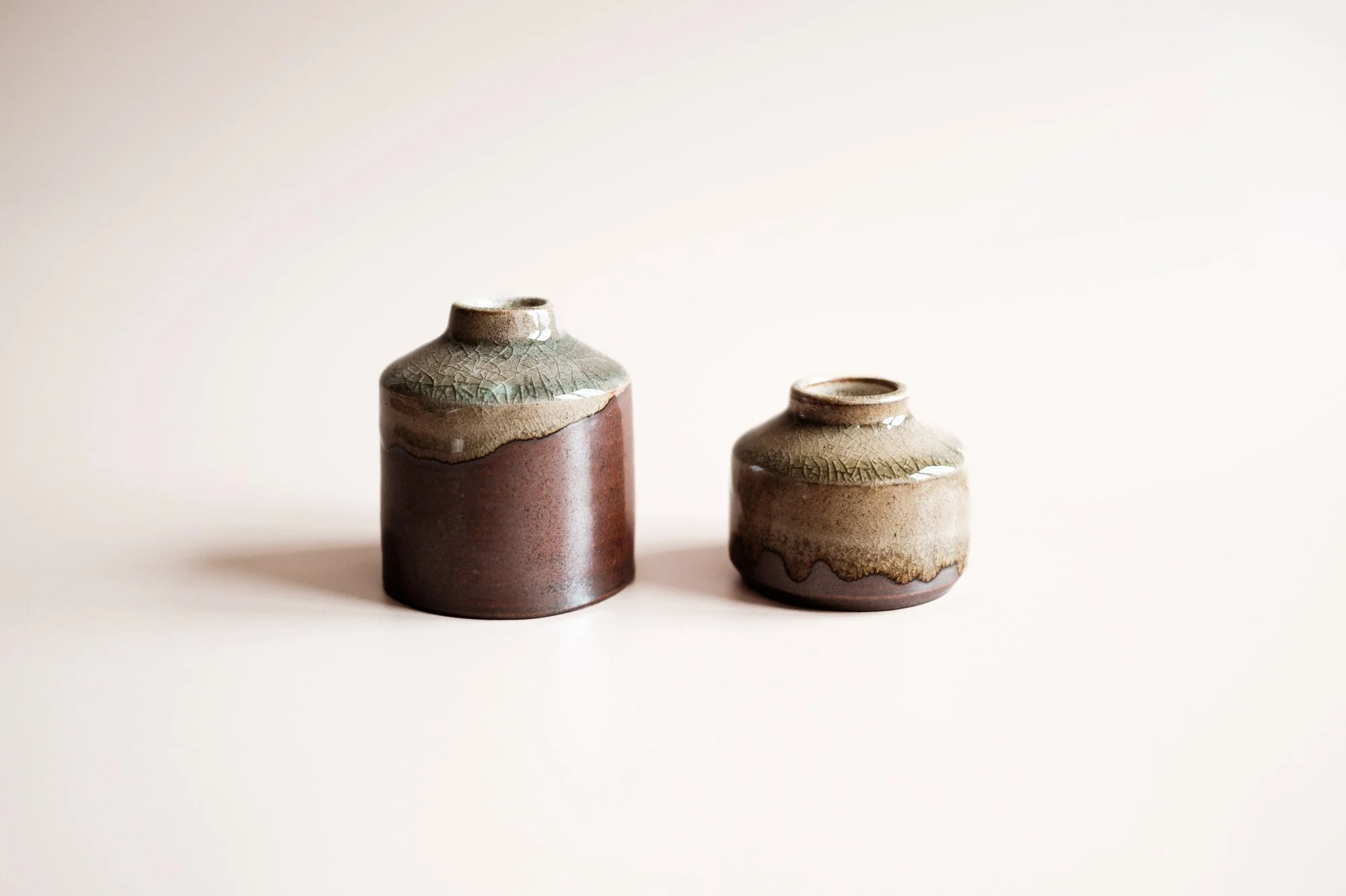
10. yoomi blue + shino 3a
11. blue de reduction + shino 3a
two more pots made out of toffee clay. the larger one truly looks metallic: I'm happy I decided to only dip the very top of the pot in the yoomi blue glaze. it’s fun to see how both these glazes appear more green on top of the toffee clay.
the inside of both was glazed with shino 3a. I quite like how the outside glaze and the inside glaze combine on the rims of these cups, creating an interesting variegation.
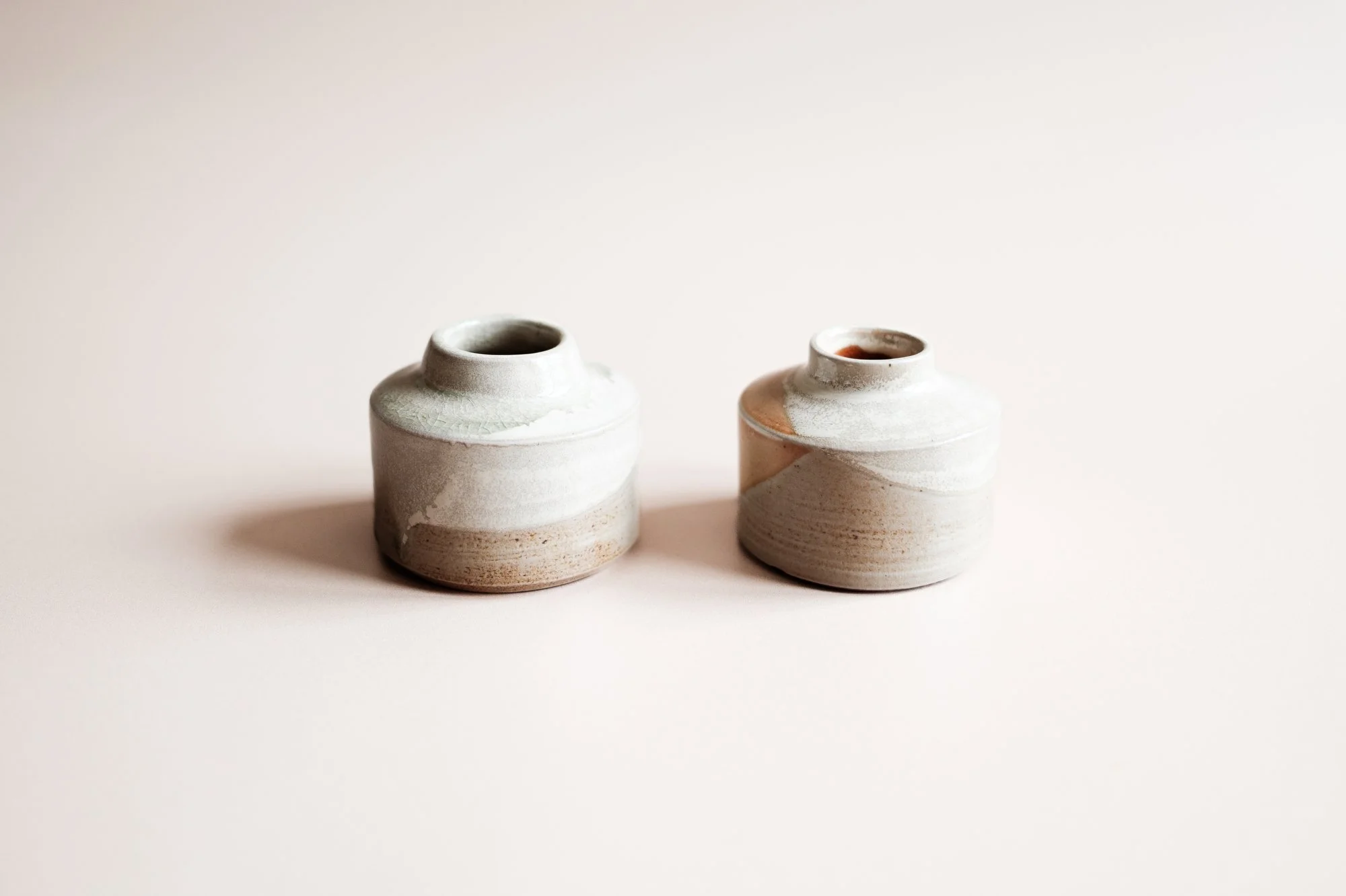
12. blue de reduction + shino 3a
13. shino 3a + red slip
on white clay, blue de reduction surely looks very different as it does on toffee clay, as the pot on the left shows. there’s some lovely crystallisation on the shoulders of this little pot.
there’s some lovely reddish shading on the pot on the right. it truly shows that with salt firing, less is more!
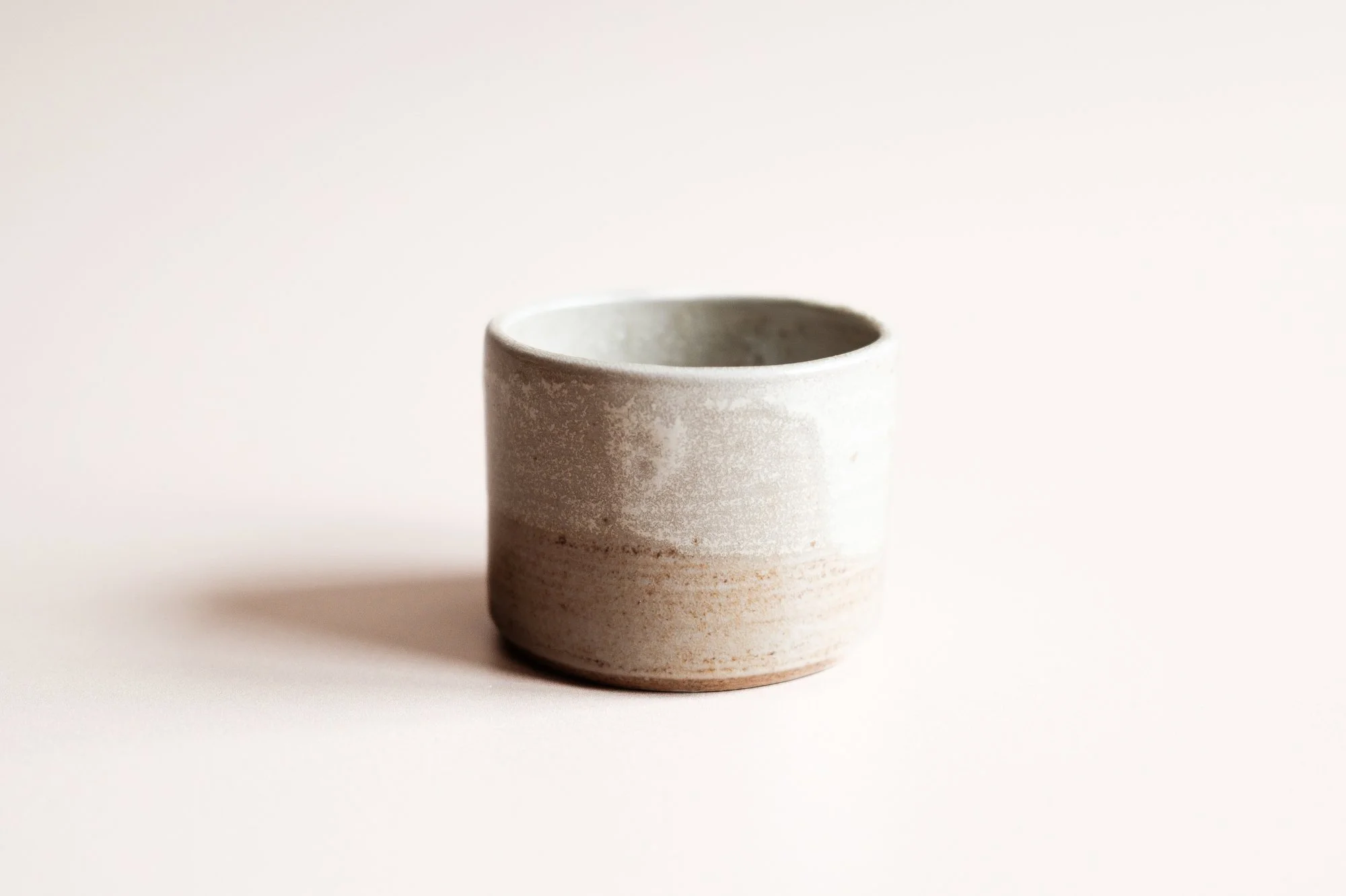
14. yoomi blue + shino 3a
although the outside of this cup looks simple, the inside is absolutely stunning. there’s some deep blue-green pooling of glaze at the bottom, which I really love.
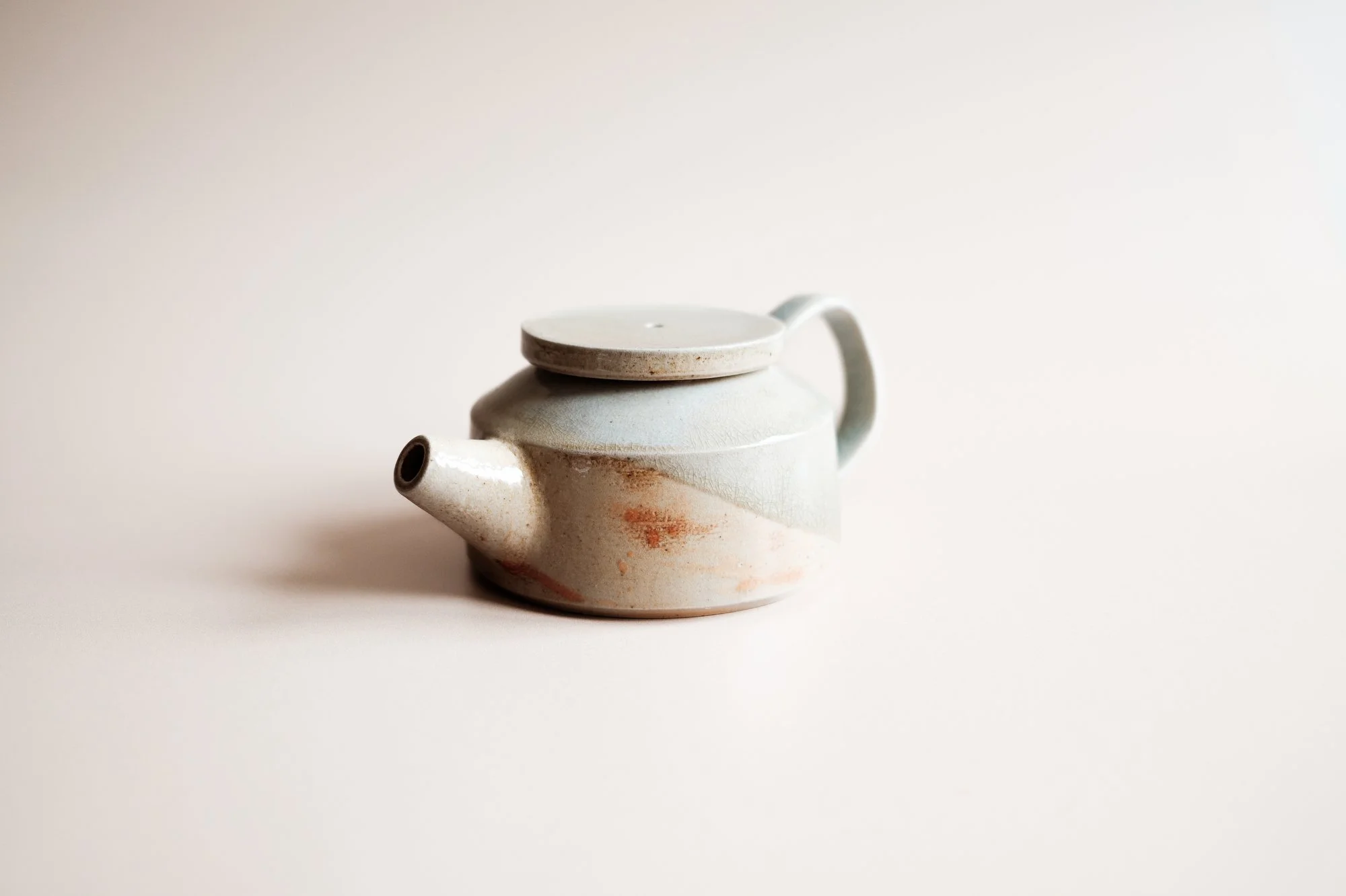
15. blue kwan chun celadon + red slip
I'm beyond pleased how my very first teapot turned out. I'm only a beginner at throwing and making a teapot is just such an intriguing process. there’s a lot of things to improve on, such as the weight of the teapot and the placement of the sprout, but all in all I'm just so excited that I managed to create something so adorable!
this teapot surely deserved a lovely salt fired finish. I love the faint blue celadon in combination with the reddish patches. the inside of the pot also shows that lovely orange-red colour, a well known characteristic of the process of salt firing.